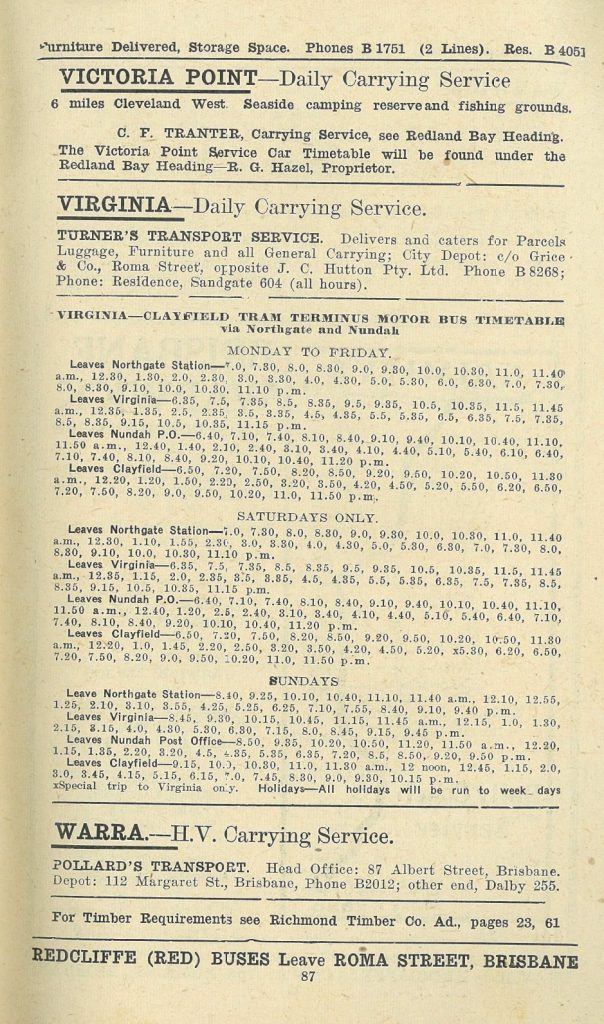
The origins of this service date back to 1922 when Mr. Henry William Gray was licensed to operate a motor bus between Virginia and Clayfield Tram Terminus. As of January 1923, nine return trips were provided on weekdays and five return trips on Saturday, with a minimum fare of 1d (one penny) and a through fare of 6d (sixpence). The route operated from St Vincent’s Road via Ridge Street, Ryans Road, Robinson Road and Sandgate Road to the tram terminus at Clayfield, and return.
At this time, Brisbane’s fledgling motor bus industry was experiencing rapid growth of services, with 18 licences issued for new services alone in the period between March 1922 and December 1922. This expansion did not go unnoticed by Queensland’s legislature which enacted the Brisbane Tramway Trust Act 1922 (Qld) to impart a new statutory authority, the Brisbane Tramway Trust, with exclusive authority over the management and operation of motor bus services within the Trust’s jurisdiction in Brisbane. Prior to this time, bus licences were issued by the Police Traffic Department. Critically, from 1 January 1923, all bus proprietors in Brisbane were issued with temporary licences for a period of six months, without any promise of renewal. Despite this initial cause for concern, the Brisbane Tramway Trust renewed existing licences for a period of 12 months from 1 July 1923.
New services to East and West Nundah
At its meeting of 30 June 1924, the Motor Bus Committee of the Brisbane Tramway Trust approved an application from Mr. Gray to operate a half hourly service from the Nundah Bridge to the Clayfield Tram Terminus, and alternate his service from this point hourly to West Nundah via Eton Street, Park Road, Hamson Terrace and Westacott Street, also via Bowes Road to the intersection of York and Killeen Streets, East Nundah.
The two licences held by Mr. Gray were renewed for a further 12 month period from 1 July 1924, until the authority to operate reverted to a 6 month term from 1 July 1925. Jurisdiction over the regulation of motor buses in Brisbane passed from the Brisbane Tramway Trust to the newly instituted Brisbane City Council from 1 December 1925.
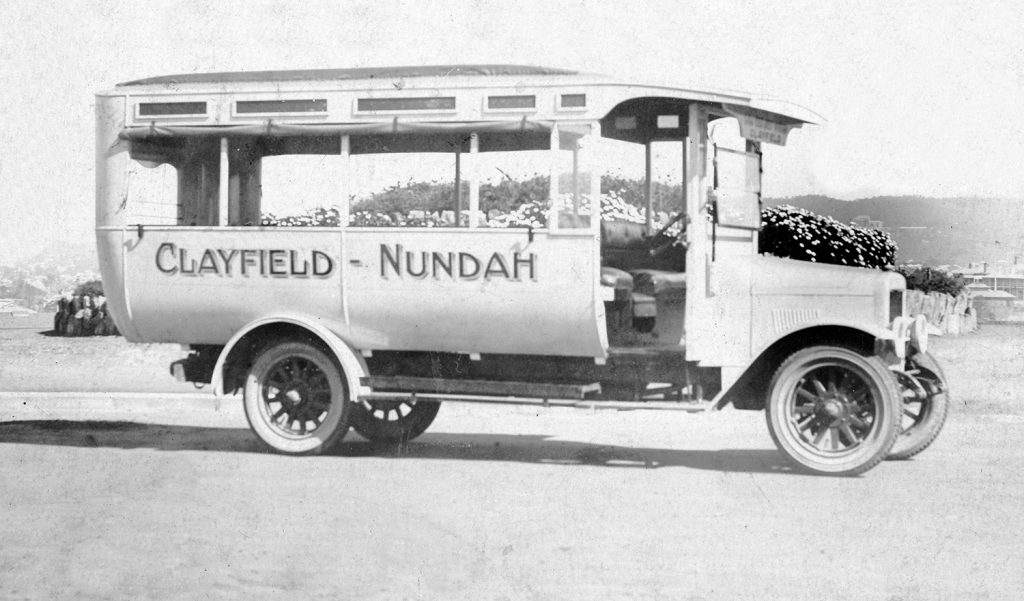
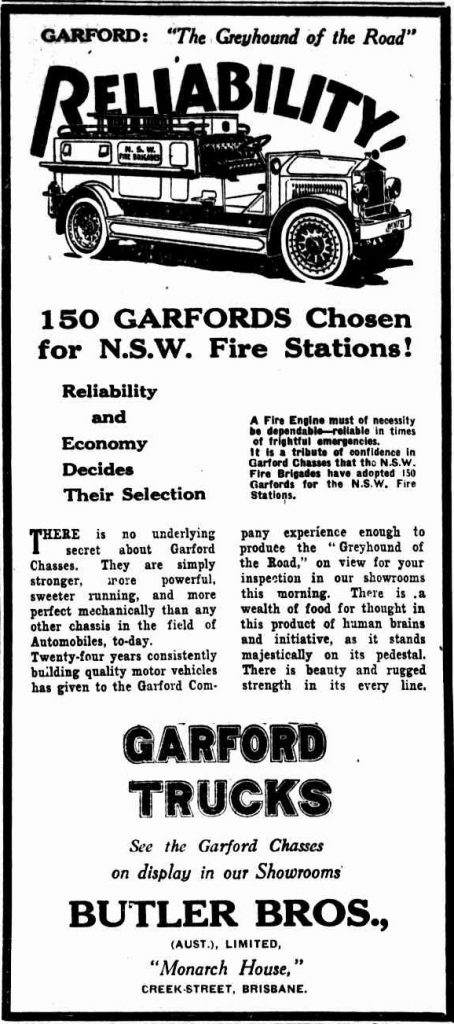
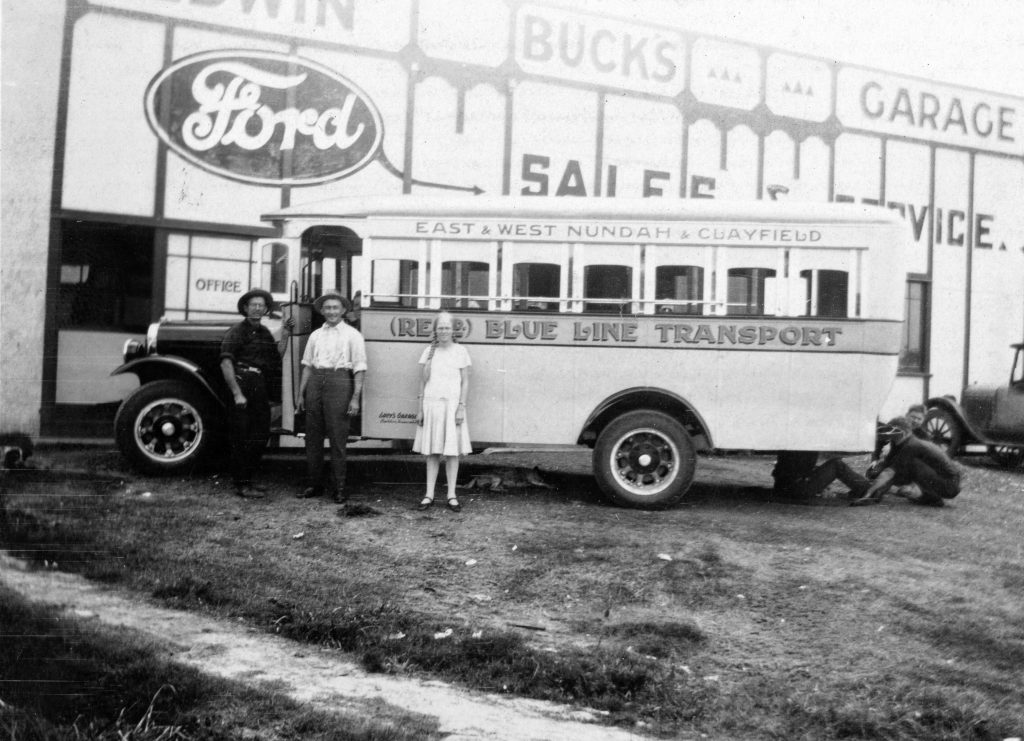
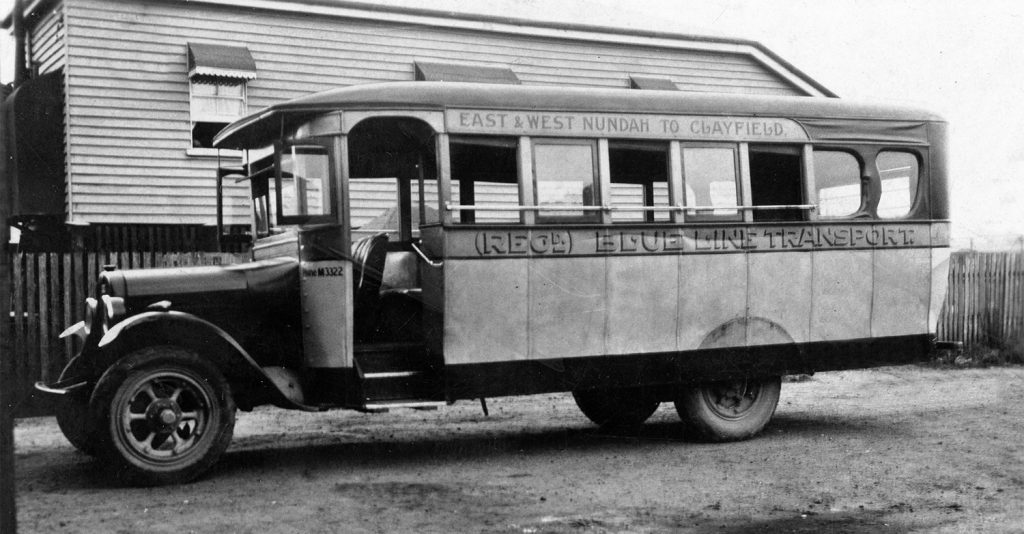
In December 1926, Mr. Gray added a new Garford bus to his fleet with bodywork by Lucy’s Garage of Toowoomba. The vehicle was powered by a six-cylinder, 70 horsepower motor, was fitted with service brakes on all four wheels, and had a wheelbase of 180 inches (4.57 metres). The chassis was marketed as “The Greyhound of the Road” and was supplied by Butler Bros (Aust.) Ltd of Creek Street, Brisbane, who were the local agent for the American-built range at the time. Upon the delivery of this vehicle, a new trading name of “Blue Line Transport” was adopted.
Service changes hands
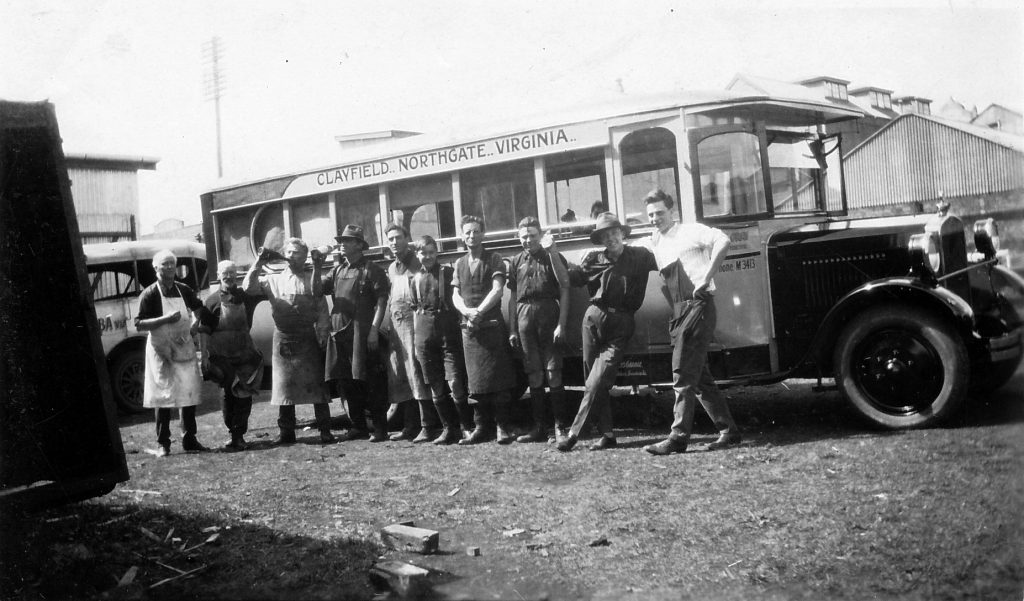
In February 1928, the business was sold by Mr. Gray to father and son, Mr. James Edgar White and Mr. William White, upon the approval of the Brisbane City Council’s Transit Committee to transfer the licences. Notably, Bill White was only 25 years of age at the time and went onto own and operate bus services at Hendra, Sandgate, Dayboro and Cribb Island until his death in September 1975. The new owners soon set about upgrading the fleet with the purchase of a second Garford with bodywork by Lucy’s Garage in Toowoomba, with Bill White driving the Garford as a chassis-only from Brisbane for this to occur.

At the meeting of Brisbane City Council’s Transit, Electric Light and Power House Committee on 25 September 1929, an application from the Whites to operate a new service between Banyo and Clayfield Tram Terminus was considered, but ultimately refused as the district was already served by the state railway.
As of 10 November 1930, the licensed services were approved by Brisbane City Council to operate as follows:
- Clayfield Tram Terminus-Nundah: 19 trips on weekdays and 7 trips on Saturdays, for a total of 406 miles per week.
- Clayfield Tram Terminus-Virginia: 12 trips on weekdays and 7 trips on Saturdays, for a total of 469 miles per week.
York Street depot
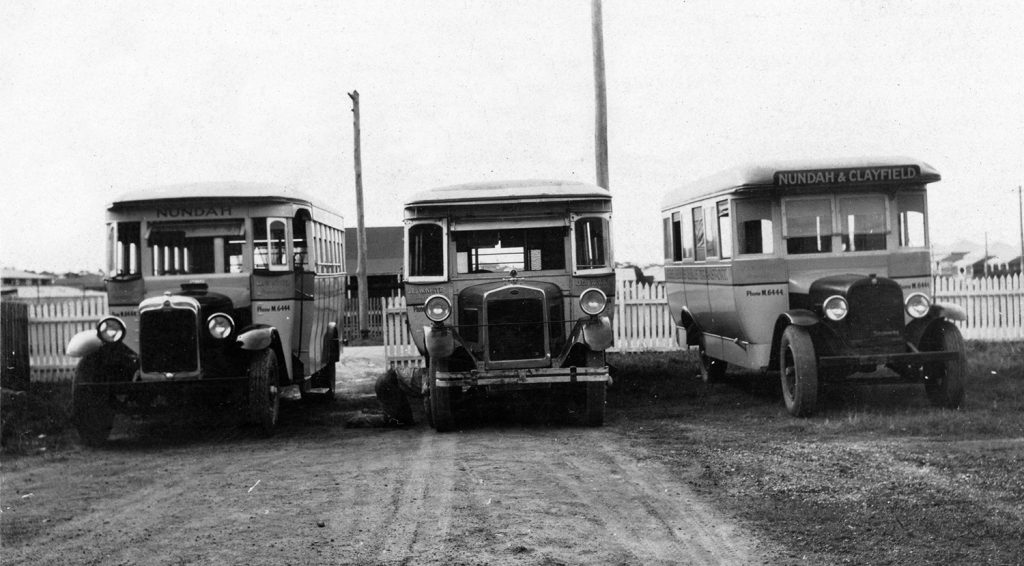
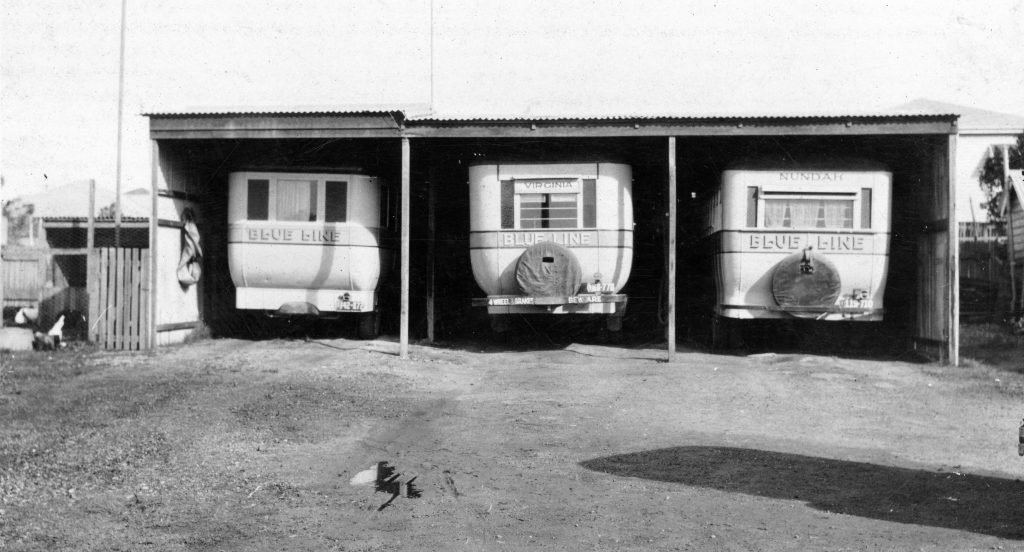
In 1931, another new bus was added to the fleet, this time on a Graham Brothers Dodge chassis. At this time the fleet comprised of three buses: the two Garfords and the Graham Brothers Dodge. By this time, the buses were depoted at York Street, Nundah adjacent to the Nundah Railway Station.
In March 1933, jurisdiction over the licensing of motor bus services in Brisbane passed from Brisbane City Council to the State Transport Board following the enactment of the State Transport Act 1932 (Qld).
Business sold to John Lynn
The White family’s ownership came to an end in early 1934 when the Virginia and East/West Nundah runs were sold to experienced bus proprietor, John Lynn. In approving the transfer of licence at its meeting of 21 March 1934, the State Transport Board noted that Mr. Lynn concurrently operated the Myrtletown-Pinkenba-Valley service (until that service was sold to Sydney Curran Mullen and Lewis Edwin Lobston in February 1935). Indeed, Mr. Lynn had previously owned the Blue and White Line service between Shorncliffe and Eagle Street in partnership with his brother Frank Lynn for 5 years.
Mr. Lynn immediately set out about upgrading the existing fleet by purchasing three Dodge buses and a B3 International. These vehicles would ply the service under successive owners for almost two decades and facilitated expansion of the service into developing areas.
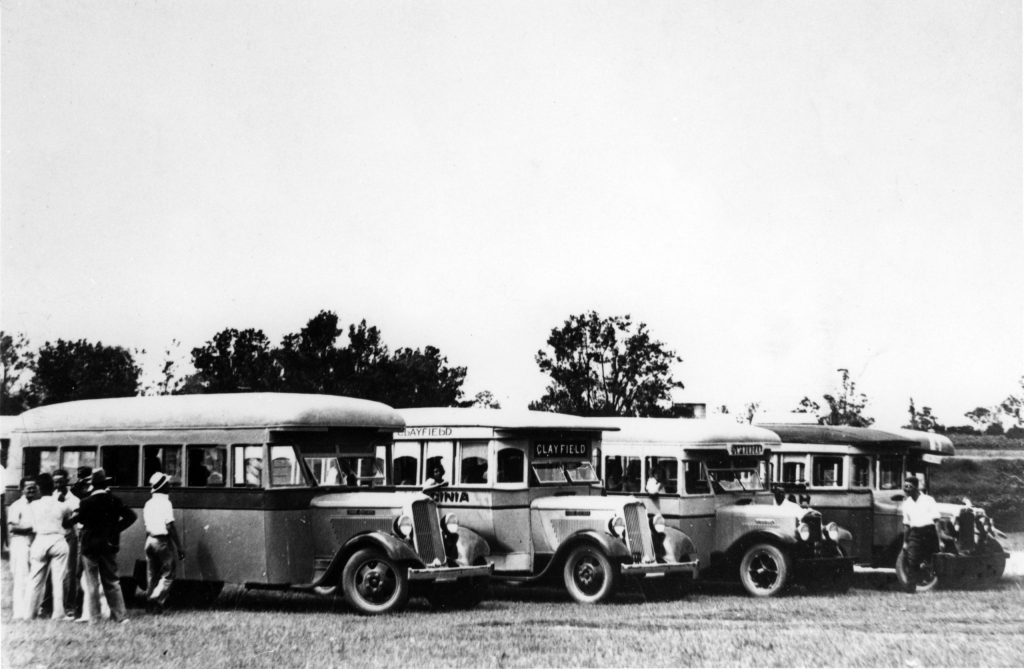
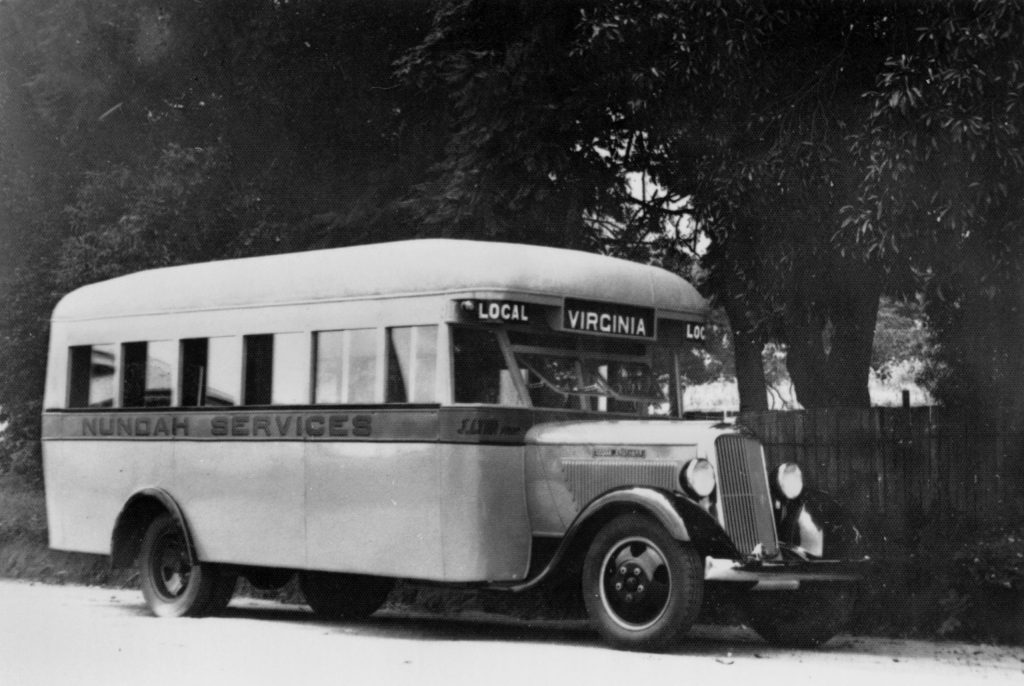
New feeder services to Kalinga and Lutwyche
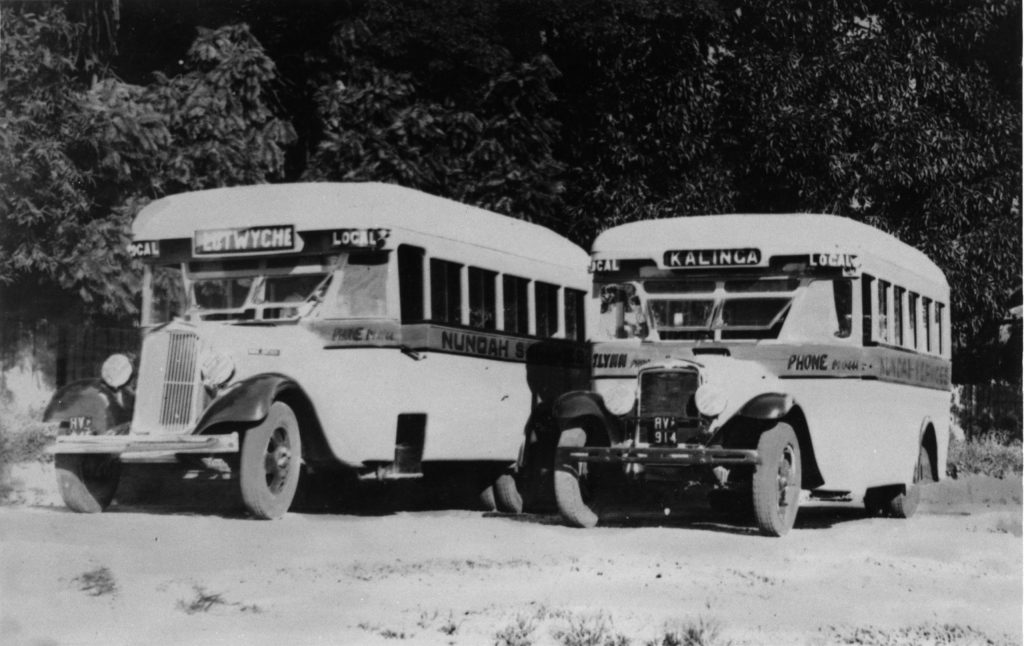
In June 1934, Mr. Lynn applied to the State Transport Board to conduct a double feeder service between the Kalinga and Lutwyche Tram termini and Rode Road, Nundah. Despite a favourable recommendation being provided by Brisbane City Council, the application was refused by the State Transport Board at its meeting of 13 June 1934 due to the objections from the Railway Department who considered the new service would deprive Nundah Railway Station of a considerable amount of traffic from the Rode Road district.
Following a deputation by local residents to the Minister for Transport, the matter was reconsidered by the State Transport Board later that year with Mr. Lynn preparing a revised application in consultation with Railway officials. The new feeder services were approved by the State Transport Board at its meeting of 20 December 1934.
Services divested by John Lynn
Having expanded his service to these new developing areas, Mr. Lynn began divesting his operation to new owners over a period of 6 years. The licensed services were sold off between June 1938 and December 1944 as follows:
| Service | New Proprietor | Transfer Date | Licensed Vehicle |
| Clayfield Tram Terminus-East Nundah & West Nundah | John Jones | June 1938 | H.V.P. 232 International 26-passenger |
| Clayfield Tram Terminus-Virginia | Charles Henry Haberman | April 1940 | H.V.P. 062 Dodge 29-passenger |
| Kalinga Tram Terminus-Lutwyche Tram Terminus via Northgate | Louis Edwin Lobston | November 1944 | STC 711 Q337-084 Dodge 31-passenger |
| Kalinga Tram Terminus-Nundah Railway Station | Harold Denham West Adam | December 1944 | STC 712 Q289-045 Dodge 24-passenger |
The focus of this article is on the further development of the Virginia Bus Service with a separate article covering the later years of the Nundah Bus Service.
Virginia Bus Service sold to Charles Haberman
At its meeting of 11 April 1940, the State Transport Commission (the successor to the State Transport Board) approved the sale of the Clayfield Tram Terminus-Virginia service to Mr. Charles Henry Haberman of Atthow Avenue, Ashgrove. The Commission considered Mr. Haberman to be a suitable person to operate the service and that he had paid the sum of £2,000 to acquire the service from Mr. Lynn. The transaction involved the sale of a single vehicle: 29-passenger Dodge bus licensed H.V.P. 062.
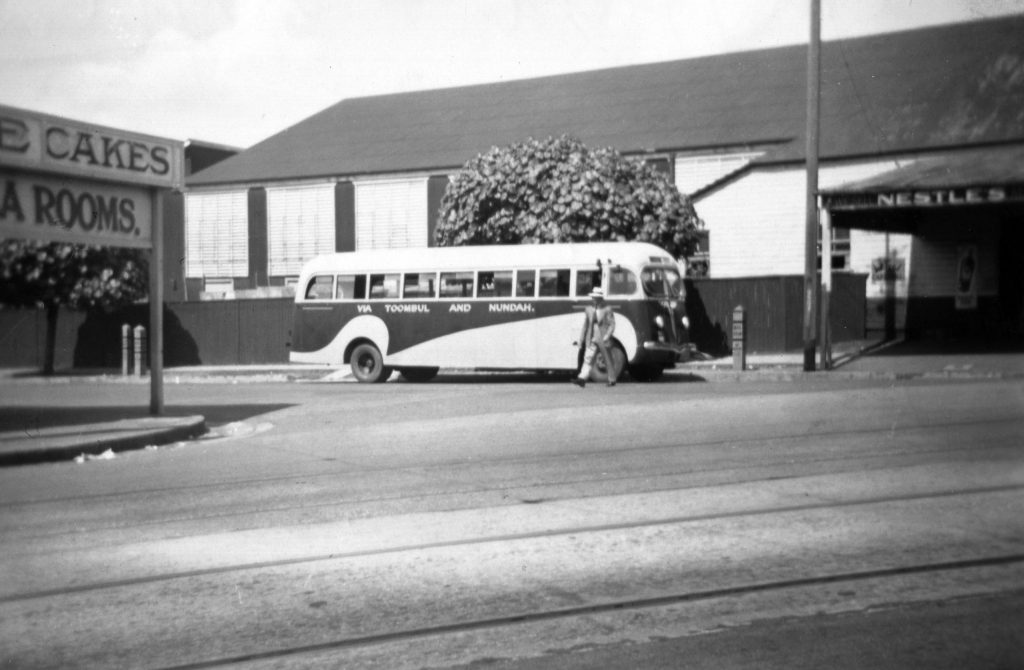
On 1 April 1941, the State Transport Commission issued new S.T.C. plate 695 to Mr. Haberman for his 27 horsepower Dodge bus depoted at Toombul Road, Northgate. At this time, the licensed service operated between Clayfield Tram Terminus and Virginia State School via Sandgate Road, Robinson Road, Ryan Road, Ridge Street, St. Vincent’s Road to the corner of Gympie Street and Sandgate Road.
New vehicles enter the fleet
In March 1943, Mr. Haberman applied to the State Transport Commission for a license to operate a new 33-passenger Ford V8 bodied by renowned builder: Watt Bros of Woolloongabba. The wooden-framed body was fitted to a 1941 Ford V8 chassis and was painted in a striking colour scheme of red and cream. It was the first new bus in the Haberman fleet and was a welcome replacement for the elderly Dodge. During World War II, the construction of bus bodies in Queensland was controlled by the Emergency Road Transport Authority due to a shortage of manpower and materials with some operators waiting up to two-and-a-half years for new fleet.
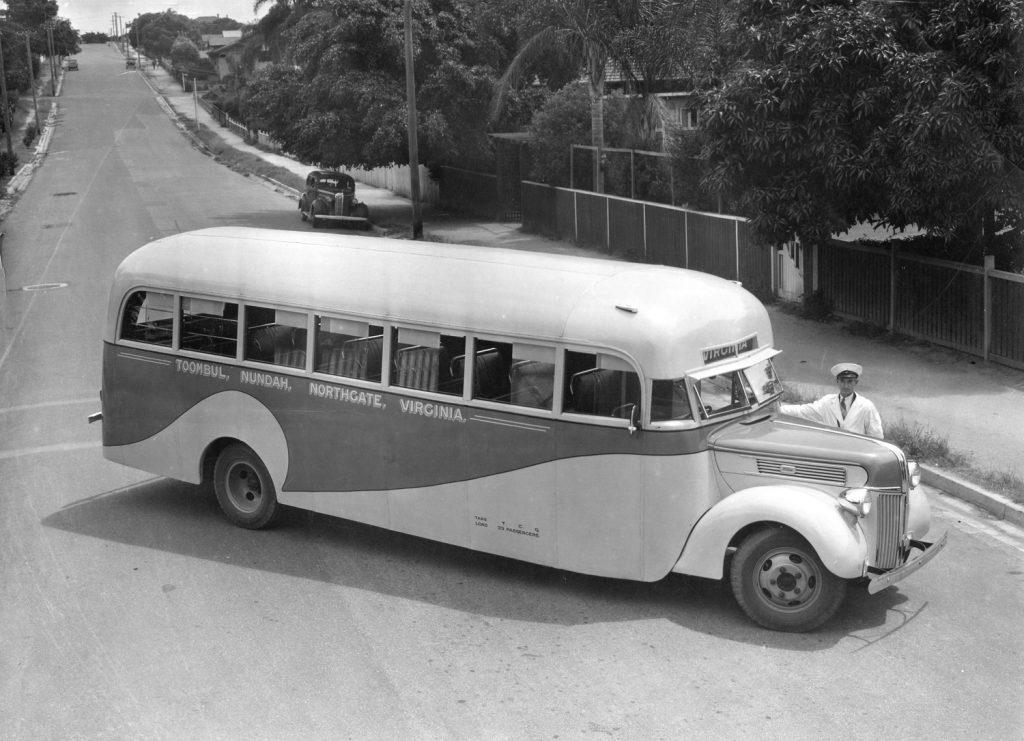
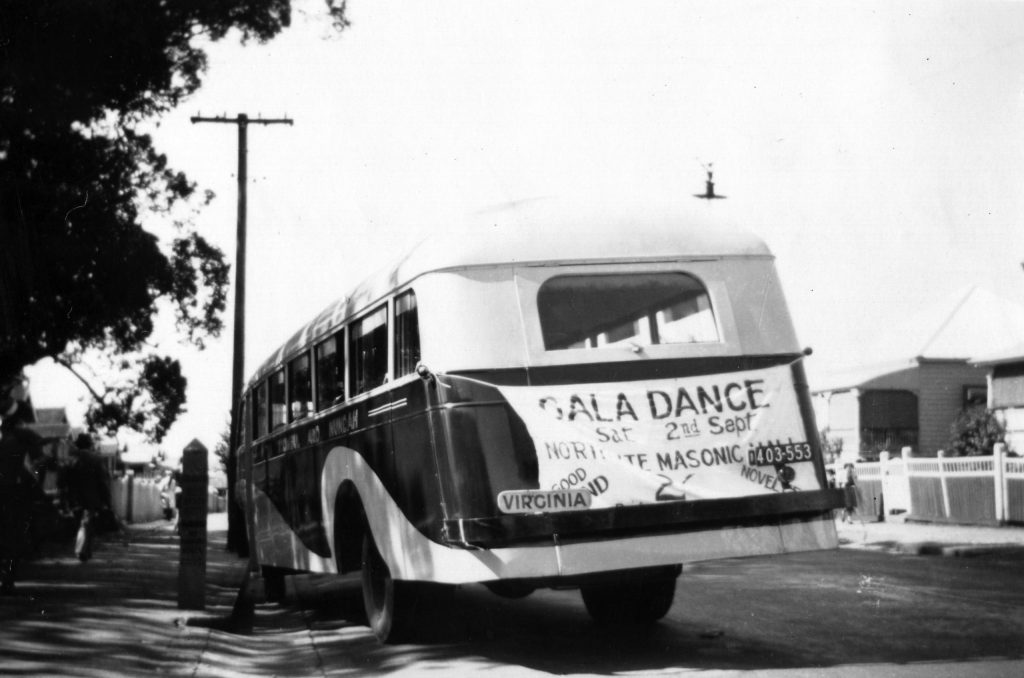
On 20 December 1945, took delivery of a second new bus this time with a 37-passenger body of forward-control design built by Thomas Gardiner & Sons at Newmarket on a KS5 International chassis. This vehicle was initially rejected by the State Transport Commission for operation because it was slightly overwidth (8 feet being the maximum width approved at the time). Upon investigation, Thomas Gardiner & Sons had found that the body supports had shifted during construction and had not been put back in the correct position. In the meantime, the body had been bracketed up with steel braces which accounted for the excess width of 1 and 1/4 inches. Thankfully for Mr. Haberman the issue was remediated and the vehicle was approved for use by the State Transport Commission at its meeting of 18 April 1946.
New passenger transport legislation
On 24 December 1946, the State Transport Facilities Act 1946 (Qld) was passed into law to bring about the most substantial reform of the transport industry in Queensland to date. The State Transport Commission would soon be abolished with jurisdiction over the licensing of passenger services conferred on the newly created position of the Commissioner for Transport. The Act provided local authorities, such as Brisbane City Council, with the right to apply to the Commissioner for Transport to be issued a licence to operate passenger services within their area. If granted, Council would displace all existing privately operated services affected by the application.
The Virginia Bus Service was initially spared from compulsory acquisition with Brisbane City Council’s application of 2 June 1947 only covering 20 City bus services and not suburban tram feeder services such as Mr. Haberman’s.
Licence number 107 (Clayfield Tram Terminus-Virginia) was issued on 1 April 1948 to Charles Henry Haberman under the State Transport Facilities Act 1946 (Qld). This new authority was issued for a 2 year term and was no longer vehicle specific as had been the case under previous regulation. Licence fees were assessed at 5% of gross revenue collected due to service partially competing with the State railway. Prior to this time, licence fees had been the same as they were in 1931 and the method of assessment has not been consistent. The assessment originated on a “power-weight-load” basis, but the percentage of which varied between 20% and 80% in the discretion of the Commission upon representations of the licensee.
New service to Nudgee
On 1 January 1948, a new service commenced operation from Clayfield Tram Terminus to Nudgee for a period 3 months, terminating at the corner of St Vincent’s Road and Hayden Street. The trial proved successful and was subsequently extended further.
The Nudgee trial service continued for the duration of 1948 with its Nudgee terminus extended to Queens Road to service St Vincent’s Orphanage, the largest non-government orphanage in Queensland. In November 1948, the Commissioner for Transport that applications should be called by public advertisement for a licence to operate between Clayfield Tram Terminus and Nudgee because the actual operations of this service were distinct from Mr. Haberman’s licensed service to Virginia.
Three applications were received by the Commissioner for Transport to operate the Nudgee service on a permanent basis: Charles Henry Haberman, Cribb Island Bus Service, and George Merland Burke (then licensee of the Clayfield Tram Traminus-East Nundah & West Nundah service). On 15 February 1949, the Commissioner for Transport determined that Mr. Haberman was most suitable applicant to conduct the service as the route proposed by Cribb Island Bus Service did not cover in full the route which the trial service operated. The Nudgee service was then incorporated into licence number 107.
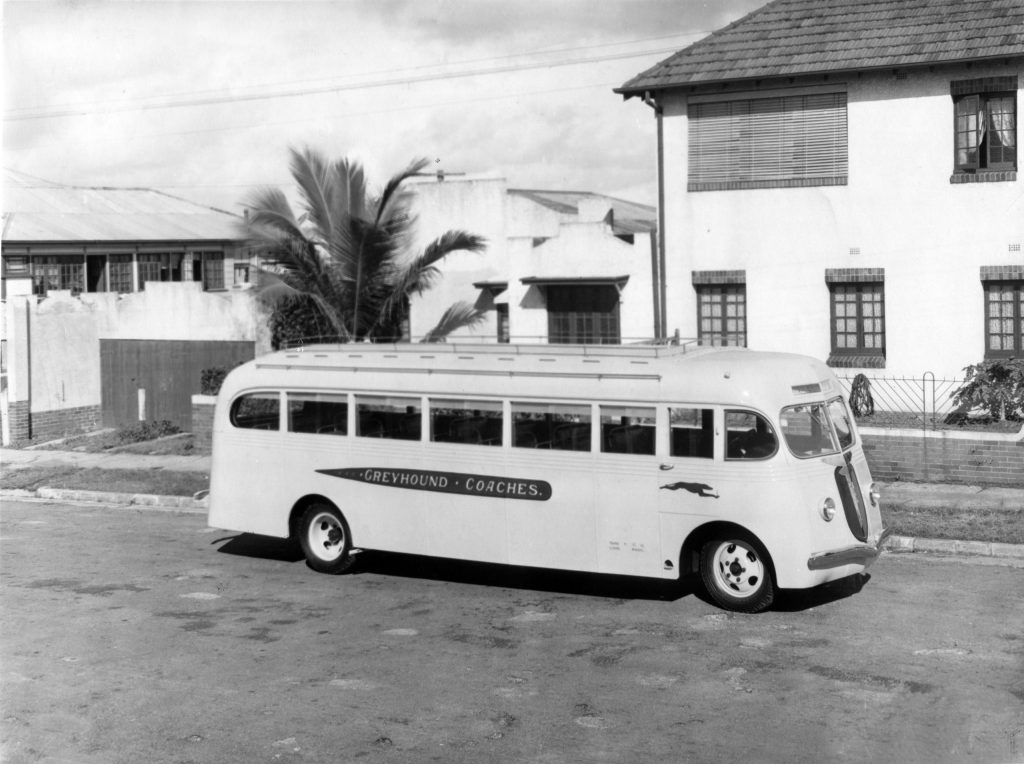
The Haberman fleet expanded to 4 buses as a 1945 Watt Bros bodied Ford V8 was acquired from Greyhound Coaches by 1950. This was a 1942 Jailbar Ford chassis that had been lengthened by R.J. Brown & Sons of Stones Corner and fitted with a modern, forward-control body by Watt Bros for operation by Greyhound between Brisbane and Woodenbong.
Council applies to takeover the Virginia Bus Service
On 3 April 1950, Brisbane City Council formally applied to the Commissioner for Transport to compulsorily acquire passenger service licence number 107 (Clayfield Tram Terminus-Virginia-Nudgee) which was due to expire on 30 April 1950. The Council lobbied the Commissioner to only renew this licence, along with 6 other tram feeder services, for 12 months being the minimum period permitted by the State Transport Facilities Act 1946 (Qld) so that Council could operate a ‘through’ service into the City from 1 April 1951. However, Council was not in a position to immediately operate the services due to the shortage of new bus chassis in Australia. To ensure that the existing services should not in any way be interrupted, and having regard to the public interest, the Commissioner for Transport determined to extend these licences for a further 2 year period through to 30 April 1952.
On 1 November 1950, the fees payable for licence number 107 (Clayfield Tram Terminus-Virginia-Nudgee) decreased to 4% of gross revenue (a reduction of 1%) on account of Council’s application to acquire the service. In the same month, a fifth bus was added to the Haberman fleet as a second hand White WA18 bus seating 39 passengers was approved for use by the Commissioner for Transport on 28 November 1950.
Brisbane City Council acquires the service
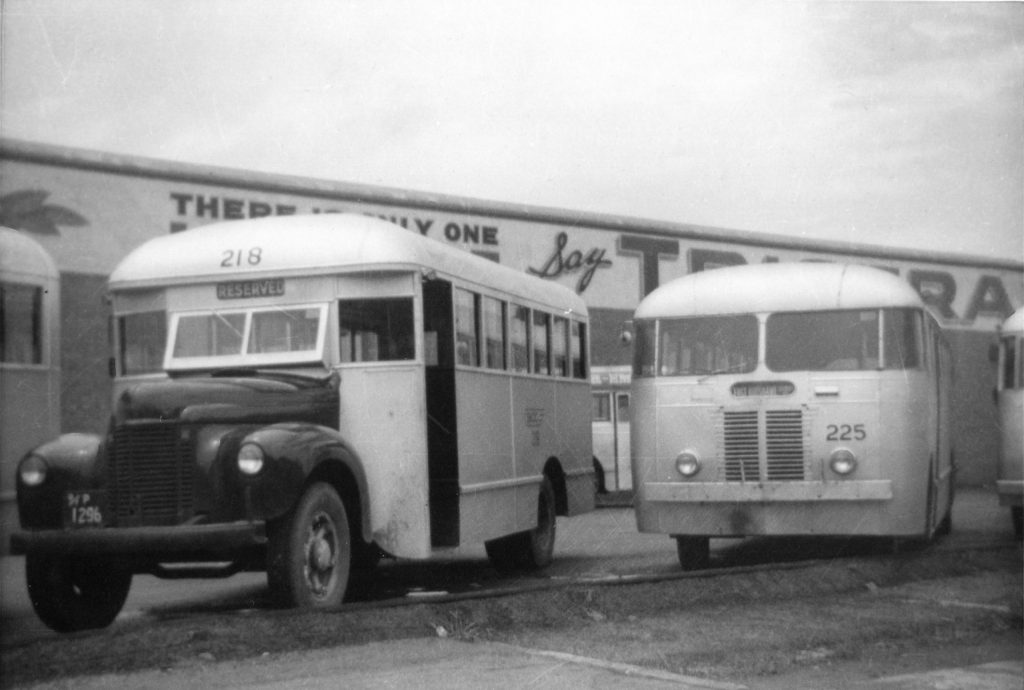
On 30 April 1952, the Haberman family operated their last services with five buses along with a range of spare parts sold to Brisbane City Council in exchange for £8,776 in compensation.
BUSES ACQUIRED BY BRISBANE CITY COUNCIL
| BCC Fleet No. | Registration | QTP | Chassis | Body Builder | Seats |
| – | Q299-780 | 0843 | Dodge K35 | 29 | |
| 222 | Q363-941 | 0841 | Ford V8 | Watt Bros | 37 |
| 223 | Q394-641 | 0707 | Ford V8 | Watt Bros | 31 |
| 224 | Q403-553 | 0842 | International KS5 | Thomas Gardiner & Sons | 37 |
| 225 | Q514-999 | 0476 | White WA18 | 39 |
From 1 May 1952, Brisbane City Council operated services from Nudgee and Virginia into the City for the first time as 30 years of private ownership came to an end.